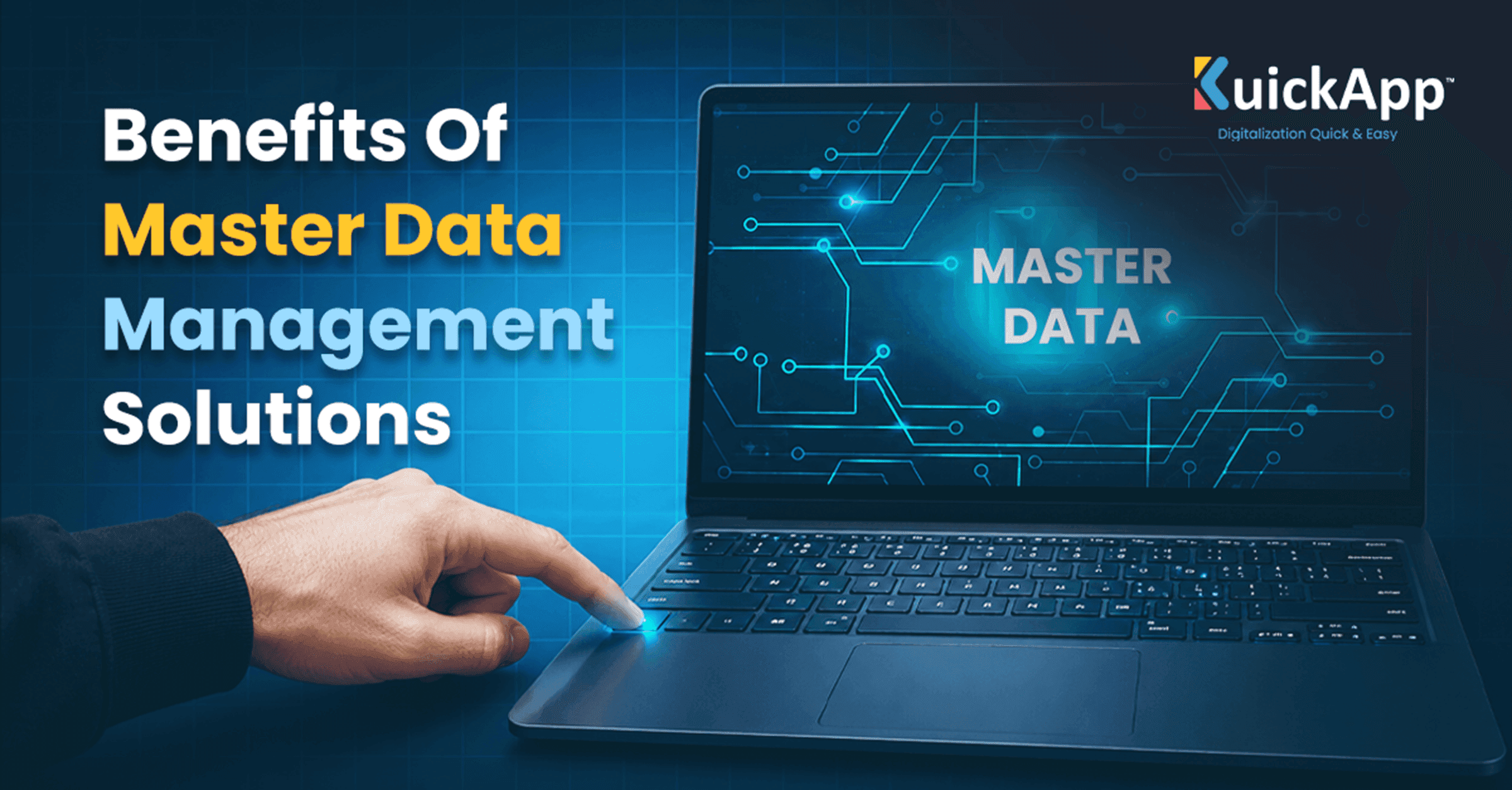
Master Data Management (MDM) centralizes an organization’s critical data like customer, product, supplier, and employee information into a single source of truth. The benefits include improved data quality, reduced duplication, streamlined operations, better compliance, and enhanced decision-making.
Organizations leveraging MDM gain operational efficiency, a unified view of data, and stronger insights that drive strategic growth.
Master Data Management is a methodology used by organizations to create a consistent, accurate, and centralized view of critical business data. It ensures that data is standardized, up to date, and accessible across multiple systems such as:
By implementing MDM, companies can maintain a single version of truth for customers, products, suppliers, employees, and locations.
1. Improved Data Quality and Accuracy
MDM ensures data is clean, validated, and consistent across all systems, reducing errors in reporting and operations.
2. Single Source of Truth
Centralizing data from multiple sources creates a unified view of customers, products, suppliers, and employees, improving trust and decision-making.
3. Streamlined Operations
With consistent data across teams, organizations reduce duplication, reconcile data faster, and improve workflow efficiency.
4. Regulatory Compliance
MDM helps organizations comply with regulations like GDPR, HIPAA, and SOX by maintaining accurate and auditable records.
5. Cost Reduction
Eliminating duplicate records, reducing errors, and optimizing workflows leads to significant operational and IT cost savings.
6. Enhanced Customer Experience
A unified view of customer data allows personalized interactions, accurate billing, and seamless multi-channel engagement.
7. Better Decision-Making
Reliable, consolidated data empowers leadership to make informed, strategic business decisions faster and more accurately.
8. Increased Operational Efficiency
Teams spend less time fixing data issues and more time focusing on high-value tasks, boosting overall productivity.
9. Faster Return on Investment (ROI)
By reducing inefficiencies, improving accuracy, and enabling smarter decisions, MDM delivers measurable ROI in months rather than years.
10. Innovation and Growth Enablement
Accurate master data fuels analytics, AI, and predictive modeling, helping organizations identify trends, optimize products, and innovate confidently.
Maximizing ROI with MDM requires a combination of strategic planning, process alignment, and technology adoption. Key steps include:
1. Prioritize High-Value Data
Focus on data that drives revenue or impacts compliance first, such as customer and product information.
2. Implement Data Governance
Assign responsibilities to data stewards to ensure accuracy and consistency.
3. Integrate Systems
Connect ERP, CRM, and analytics platforms to reduce silos and improve insights.
4. Monitor and Improve
Continuously track data quality, remove duplicates, and resolve inconsistencies.
5. Leverage Analytics
Use master data for predictive modeling, reporting, and trend analysis to support strategic decisions.
Outcome
By following these steps, organizations can see faster ROI through reduced costs, improved efficiency, and better business outcomes.
Kuickapp provides comprehensive MDM solutions designed to simplify data management and maximize the benefits of a single source of truth. With Kuickapp, organizations can:
Why Kuickapp?
1. Data Governance
Policies and procedures to maintain data quality.
2. Data Integration
Combining data from multiple sources into one system.
3. Data Stewardship
Assigning responsibility for maintaining data accuracy.
4. Data Modeling
Structuring master data for usability and analytics.
Q1: What types of data does MDM manage?
A1: MDM typically manages customer, product, supplier, employee, and location data.
Q2: How quickly can businesses see ROI from MDM?
A2: Many organizations notice improvements in data accuracy, operational efficiency, and decision-making within 6–12 months after implementation.
Q3: Is MDM only for large organizations?
A3: No. Both small and medium-sized businesses can benefit by reducing errors, improving customer insights, and streamlining operations.
Q4: Which MDM platforms are popular?
A4: Leading MDM platforms include SAP Master Data Governance, Informatica MDM, and Oracle MDM.
Master Data Management is a powerful tool that centralizes critical business data to improve accuracy, efficiency, and strategic decision-making. By maximizing ROI through structured implementation and leveraging platforms like KuickApp, businesses can enjoy streamlined operations, cost savings, enhanced compliance, and superior customer experiences.