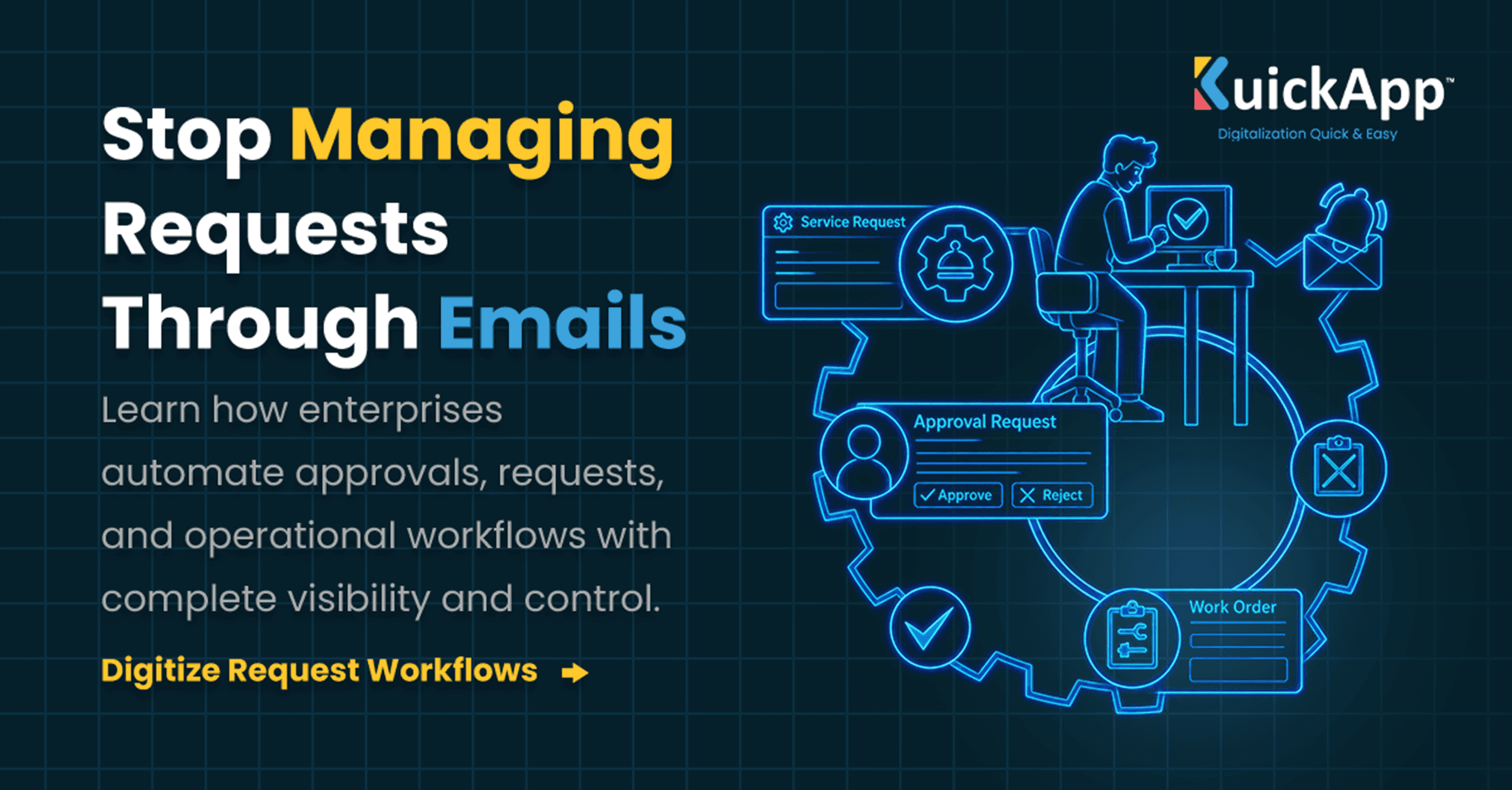
An approval workflow helps organizations route requests automatically, reduce delays, improve accountability, and eliminate approval bottlenecks.
With a structured workflow, enterprises can streamline approvals, connect directly with ERP systems like SAP, improve audit readiness, and ensure requests never get lost in email chains.
An approval workflow is a structured process that defines how business requests move through review and approval stages before being completed.
It replaces manual approvals and scattered communication with rule-based routing, ensuring every request reaches the right stakeholder at the right time.
Many organizations still rely on emails, spreadsheets, WhatsApp messages, and verbal approvals to manage business requests.
These disconnected processes lead to delayed approvals, missing records, compliance risks, and unnecessary operational inefficiencies.
1. Procurement Approvals
Purchase requisitions, vendor onboarding, and PO approvals require structured routing and approval visibility.
2. Finance Approvals
Expense claims, invoice approvals, and CAPEX requests need audit-ready approval trails and compliance checks.
3. HR Approvals
Hiring approvals, travel requests, and onboarding processes benefit from faster and more transparent workflows.
4. IT Approvals
User access requests and software approvals require secure routing and approval tracking.
5. Manufacturing and Operations Approvals
Gate passes, maintenance approvals, and operational requests require structured workflows to maintain safety and compliance.
1. Start with One High-Impact Process
Focus first on approval processes that create the most delays or compliance issues, such as procurement or vendor onboarding.
2. Map the Approval Hierarchy
Define who submits requests, who approves them, approval thresholds, escalation rules, and backup approvers.
3. Build Structured Request Forms
Use mandatory fields, dropdowns, validations, and document uploads to ensure requests contain complete information before submission.
4. Configure Automated Routing Logic
Create routing conditions based on request amount, department, vendor type, or business rules.
5. Add Escalation and Delegation Rules
Configure reminders, escalations, and auto-delegation so requests never remain stuck due to unavailable approvers.
6. Integrate with ERP Systems
Connect workflows directly with SAP or ERP systems to eliminate manual data entry and ensure accurate transactions.
7. Test Before Full Rollout
Run real approval requests through the workflow to identify routing gaps, missing validations, and integration issues before company-wide deployment.
Bottlenecks in Approval Chains
Delays occur when approval thresholds are unclear or backup approvers are not assigned.
Incomplete Request Forms
Missing fields and inconsistent data cause repeated follow-ups and approval delays.
Lack of Status Visibility
Without dashboards and notifications, requestors struggle to track approval progress.
Manual ERP Data Entry
Disconnected systems increase errors, duplicate work, and reconciliation issues.
Request management handles routine business approvals such as purchase requests, expense claims, and user access approvals.
Change management focuses on operational or system changes that carry business risk and require formal assessment before implementation.
KuickApp helps enterprises automate approval workflows using a low-code platform designed for operational efficiency and rapid deployment.
Why Enterprises Choose KuickApp
Q1: What is an approval workflow?
A1: An approval workflow is a structured process that routes requests through predefined approval stages before completion.
Q2: How do automated approval workflows work?
A2: Automated workflows use routing rules, approvals, escalations, and integrations to process requests without manual coordination.
Q3: What is a multi-level approval workflow?
A3: A multi-level approval workflow routes requests through multiple approvers based on conditions such as amount, department, or request type.
Q4: Why integrate approval workflows with SAP?
A4: SAP integration eliminates manual data entry, improves accuracy, and ensures approved requests automatically trigger ERP transactions.
A structured approval workflow helps organizations eliminate delays, improve compliance, reduce manual effort, and streamline operations across departments. By combining automation, approval routing, escalations, and ERP integration, enterprises can build workflows that teams actually use and trust.